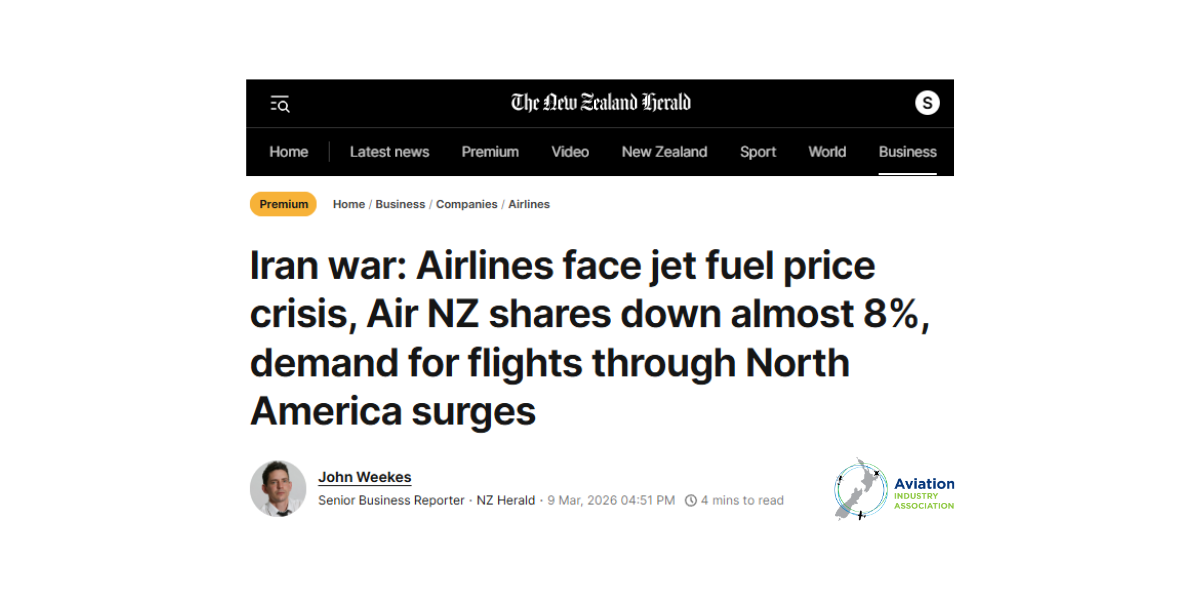
Simon Wallace appeared on 1News at Six on 7 March 2026, highlighting the growing impact of rising global fuel prices on both international and domestic travel. He noted that the conflict in the Middle East is already pushing up international airfares, with similar pressures expected to flow through to domestic routes.
“Clearly we are an industry that’s dependent on fuel,” he said. “We are already seeing increases in international airfares because of what is happening, and it’s inevitable that this will flow through to the cost of domestic airfares in New Zealand.”

In an interview with the NZ Herald, Aviation Industry Association of New Zealand chief executive Simon Wallace said rapidly rising oil and jet fuel prices are creating significant challenges for airlines and the wider aviation sector, with Brent crude climbing above US$100 a barrel amid the ongoing Middle East conflict.
Wallace said the sector is now facing both supply and price pressures, with disruptions to some Middle Eastern carriers shifting demand onto other airlines and increasing operational strain.
“We’ve already seen the international airfares increase … last week, particularly between here and Europe,” he said.
He noted that services from major Middle Eastern hubs have been disrupted since the war began in late February, reducing available capacity and placing additional demand on alternative routes via North America and Asia. Longer flight paths and congestion on those routes are also increasing fuel burn and operating costs.
“If you take out some of the Middle Eastern carriers then that’s putting more demand onto other airlines,” Simon said.
Simon said some domestic fare increases were inevitable, with Air New Zealand and regional airlines already under pressure before the conflict escalated.
“They all struggle to absorb those costs.”
He stressed that the impact of higher fuel prices extends well beyond major airlines, affecting flight training schools, helicopter operators, and the broader general aviation community, all of which are heavily dependent on fuel.
“They all depend on fuel.”
Simon said while some airlines hedge fuel costs, any relief from falling crude prices would take time to flow through to jet fuel markets.
“There’s not going to be a sudden decrease in prices as soon as the Middle East war stops.”
Despite the challenges, Simon said the industry has demonstrated resilience in the past.
“Aviation, believe it or not, is resilient. We’ll get through it … but we’re also an industry that works on very slim margins.”
He warned that sustained high fuel prices could eventually influence capacity decisions if route profitability becomes unsustainable, underscoring the need for close monitoring as the situation continues to evolve.